Forex Trading for Beginners in 2026: The Ultimate Step-by-Step Guide to Start Profiting Safely
Meta Description:
Learn forex trading for beginners in 2026 with this complete step-by-step guide. Discover how to start trading forex, choose the best broker, manage risk, and build a profitable strategy.
Introduction: Why Forex Trading Is Booming in 2026
Forex trading in 2026 continues to attract beginners worldwide because of its accessibility, 24-hour market structure, and low starting capital requirements. With daily trading volume exceeding trillions of dollars, the foreign exchange market remains the largest financial market globally.
Thanks to advanced trading platforms, AI-powered analytics, and stricter regulation, beginners today have more tools and protection than ever before. However, success still depends on knowledge, discipline, and risk management.
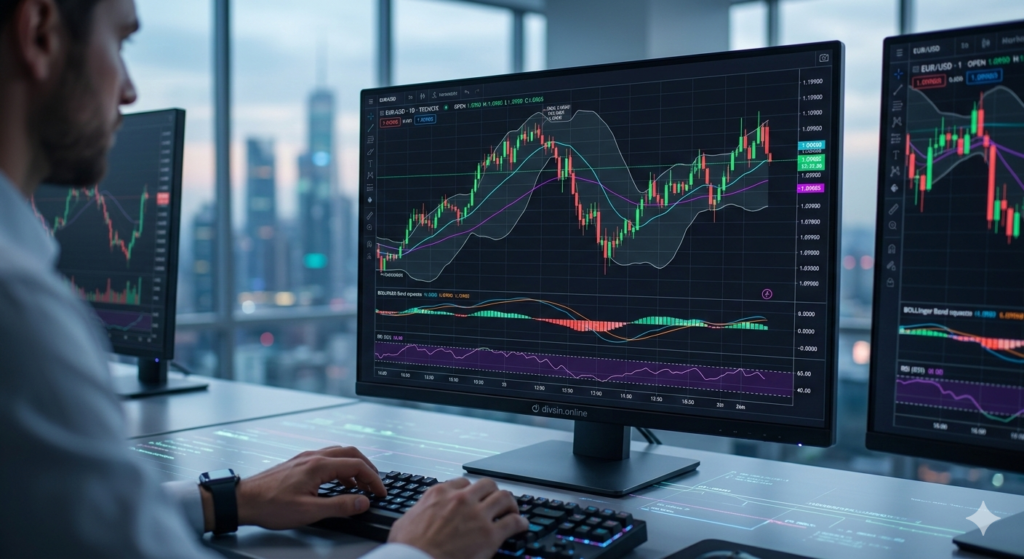
If you’re searching for:
- How to start forex trading in 2026
- Forex trading step by step for beginners
- How to make money trading forex
- Best forex strategy for beginners
This complete guide will walk you through everything.
What Is Forex Trading?
Forex (Foreign Exchange) trading is the process of buying one currency and selling another to profit from price changes.
Currencies are traded in pairs such as:
- EUR/USD
- GBP/USD
- USD/JPY
When you buy EUR/USD, you are buying euros and selling US dollars. When you sell it, you are selling euros and buying US dollars.
The forex market operates 24 hours a day across major financial centers including:
- London
- New York City
- Tokyo
- Sydney
This global structure ensures continuous trading opportunities five days a week.
Step 1: Learn the Basics of Forex Trading
Before risking money, you must understand key forex terms.
1. Pip
A pip is the smallest price movement in a currency pair (usually 0.0001).
2. Lot Size
- Standard Lot = 100,000 units
- Mini Lot = 10,000 units
- Micro Lot = 1,000 units
Beginners should always start with micro lots.
3. Spread
The spread is the difference between the buy (ask) and sell (bid) price.
4. Leverage
Leverage allows you to control a larger position with smaller capital. For example, 1:100 leverage means $100 controls $10,000.
⚠️ Important: High leverage increases both profits and losses. In 2026, many regulators limit leverage for retail traders to reduce risk.
Step 2: Understand What Moves the Forex Market
To trade successfully, you must understand price drivers.
1. Interest Rates
Central banks influence currency value, including:
- Federal Reserve
- European Central Bank
- Bank of England
Higher interest rates often strengthen a currency.
2. Inflation
High inflation can weaken currency value.
3. Employment Data
Strong job growth usually strengthens a currency.
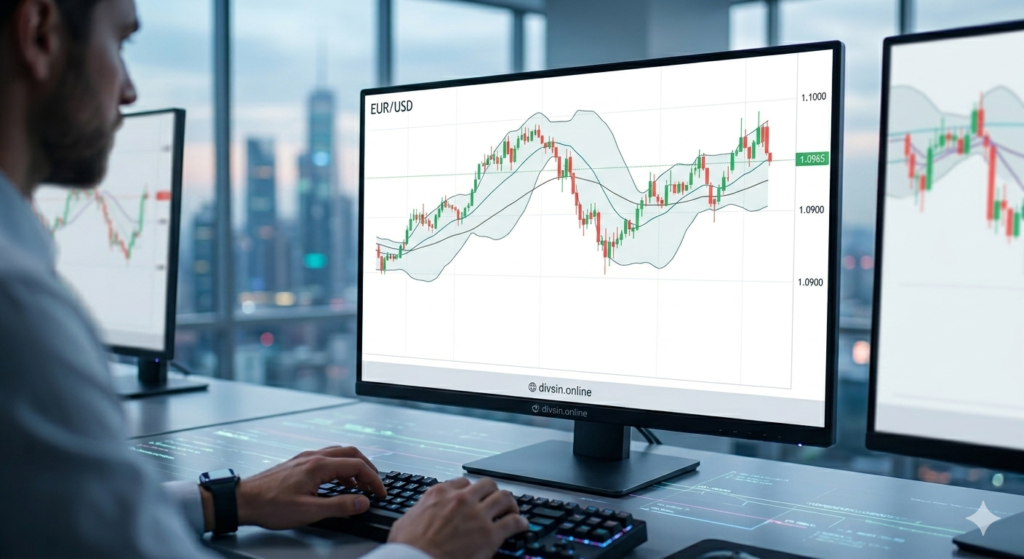
4. Political Stability
Elections, wars, or economic crises can cause volatility.
Monitoring economic calendars is essential for beginners.
Step 3: Choose the Best Forex Broker in 2026
Selecting a regulated broker is critical for safety and long-term success.
Look for:
- Regulation and licensing
- Low spreads
- Fast execution
- Strong customer support
- Beginner-friendly platforms
Popular regulated brokers in 2026 include:
- IG Group
- OANDA
- Forex.com
Always verify regulation in your country before depositing funds.
Step 4: Open a Demo Account First
One of the biggest beginner mistakes is skipping practice.
A demo account allows you to:
- Trade with virtual money
- Test strategies
- Learn platform features
- Practice risk management
Spend at least 1–3 months trading demo before going live.
Step 5: Learn Forex Trading Strategies for Beginners
There are two main types of analysis in forex trading:
Technical Analysis (Chart-Based Trading)
This involves analyzing price charts and patterns.
Common beginner tools:
- Support and resistance
- Trend lines
- Moving averages
- RSI (Relative Strength Index)
- MACD
In 2026, many platforms offer AI-assisted pattern recognition, but understanding fundamentals yourself remains essential.
Fundamental Analysis (News-Based Trading)
This focuses on economic events like:
- Interest rate decisions
- GDP releases
- Inflation reports
- Central bank speeches
For example, if the Federal Reserve signals rate hikes, the US dollar often strengthens.
Step 6: Master Risk Management (The #1 Success Factor)
Most beginners fail because they ignore risk.
Follow these golden rules:
Rule 1: Risk Only 1–2% Per Trade
If your account is $500, risk only $5–$10 per trade.
Rule 2: Always Use Stop Loss
A stop loss automatically closes losing trades at a set level.
Rule 3: Maintain 1:2 Risk-Reward Ratio
Aim to make twice what you risk.
Rule 4: Avoid Emotional Trading
Fear and greed destroy accounts.
Professional traders focus more on protecting capital than chasing profits.
Step 7: Place Your First Live Trade (Small)
After:
- Practicing on demo
- Testing your strategy
- Understanding risk
You can start live trading with a small deposit.
Example:
- Buy EUR/USD
- Risk 20 pips
- Target 40 pips
- Use micro lot
Start small and increase gradually as you gain consistency.
How Much Money Do You Need to Start Forex Trading in 2026?
Technically: $100
Realistically: $300–$1,000
More capital allows better risk control and flexibility.
Never trade money you cannot afford to lose.
Is Forex Trading Profitable in 2026?
Yes — but only with discipline.
Statistics show most retail traders lose because they:
- Over-leverage
- Trade emotionally
- Lack strategy
- Ignore risk management
Forex trading is a skill. It takes 6–18 months of consistent learning to become profitable.
Treat it like a business, not gambling.
Benefits of Forex Trading in 2026
- 24-hour global market
- Low starting capital
- High liquidity
- Advanced AI trading tools
- Mobile trading access
- Regulated brokers for safety
Common Beginner Mistakes to Avoid
- Using maximum leverage
- Trading without stop loss
- Overtrading daily
- Following random signals
- Expecting fast riches
- Ignoring economic news
Avoid these, and your chances of success increase dramatically.
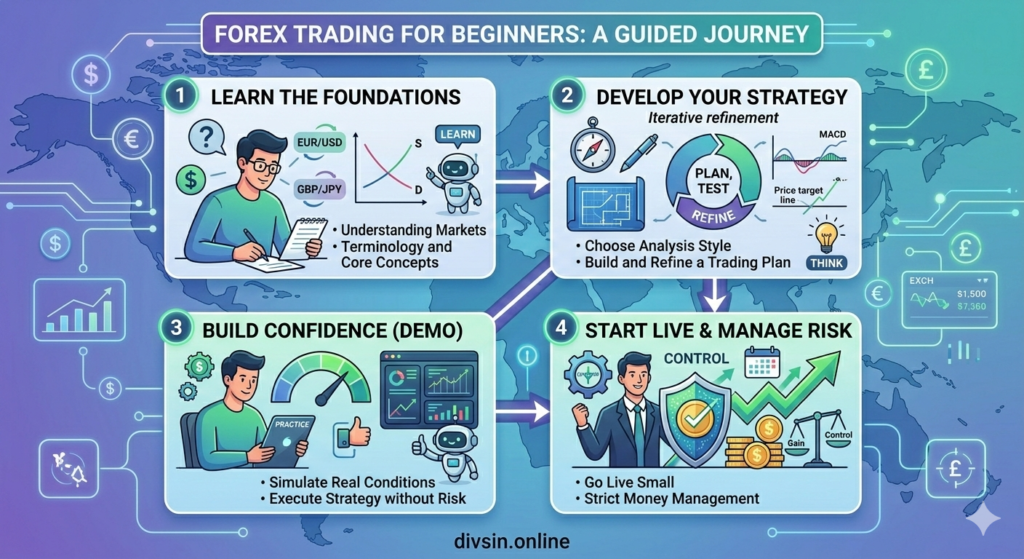
Final Thoughts: How to Become a Successful Forex Trader
Forex trading for beginners in 2026 offers incredible opportunity — but only for those who approach it with patience and structure.
To succeed:
- Learn continuously
- Practice on demo
- Focus on risk management
- Track your performance
- Stay emotionally disciplined
Forex trading is not a get-rich-quick scheme. It is a professional skill that rewards consistency.
If you want, I can also create:
- A high-converting SEO blog version formatted for WordPress
- A 30-day forex learning plan for beginners
- A downloadable forex trading checklist
- A YouTube script version optimized for ranking
Tell me your goal (blog, YouTube, affiliate marketing, etc.), and I’ll tailor it for maximum impact.